
ROBERTA: Austria’s Flagship Project for Highly Automated Level 4 Buses

ROBERTA: Austria’s flagship project for highly automated Level 4 buses – and my legal expertise
With the ROBERTA flagship project (“Real World Automated Bus opERaTion Austria”), Austria is entering a new phase of automated driving in public transport.
For the first time, highly automated Level 4 buses (M2/M3) with more than eight passenger seats will operate in regular scheduled services and undergo scientific testing in urban, suburban and rural areas across four Austrian federal states. The project focuses on real-world operation with trained safety personnel on board, as well as the development of remote-monitoring systems adapted to Austria’s legal and operational environment.
My role in the project
Because of my specialist expertise in automated driving, I am the only legal project partner in the Austria-wide ROBERTA consortium and advise the project on all legal and regulatory matters. My role is to assess the legal framework governing the use of highly automated buses in public transport, identify legal risks at an early stage and develop proposals for the further evolution of the existing regulatory framework.
This allows me to contribute my specialisation in automated driving, product liability, data protection and compliance to one of Austria’s most important current mobility projects. The objective is to facilitate the legally sound, responsible and practical deployment of highly automated buses in scheduled passenger services.
Key legal issues
My legal work focuses on the regulatory questions arising from the planned routes and from the use of connected fleet and remote-management systems. These include:
- Data-protection requirements for video surveillance in highly automated bus systems and their data ecosystems.
- Data security and cybersecurity in the operation of connected fleets and remote-management systems.
- Liability, responsibility and the allocation of roles among manufacturers, operators, infrastructure operators and safety personnel.
- Operating permits, amendments to Austria’s Automated Driving Regulation (AutomatFahrVO) and other applicable legal provisions.
The aim is to make the operation of highly automated buses in scheduled public transport legally sound, responsible and workable in practice.
Key facts about ROBERTA
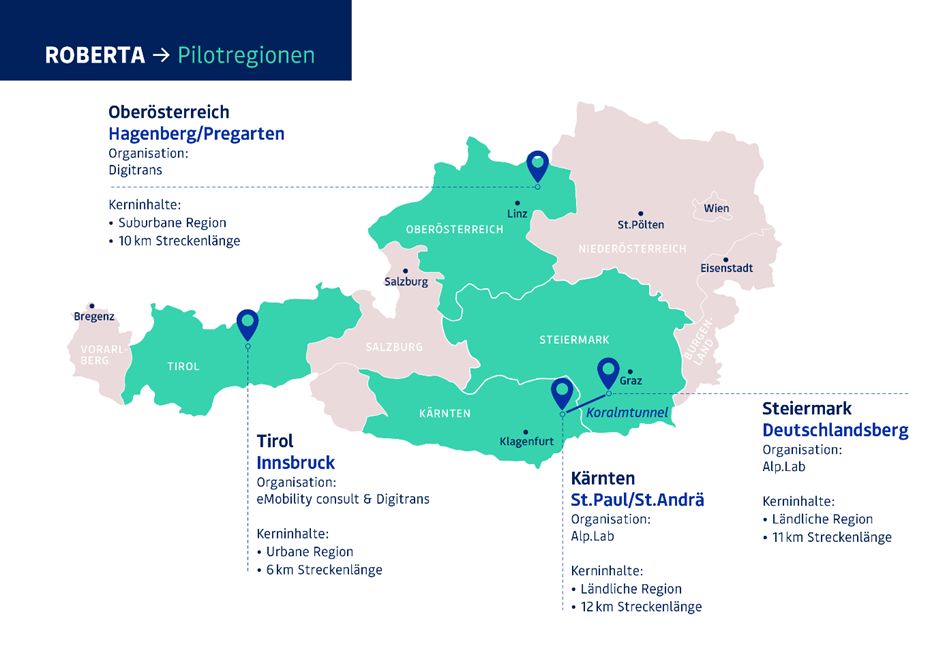
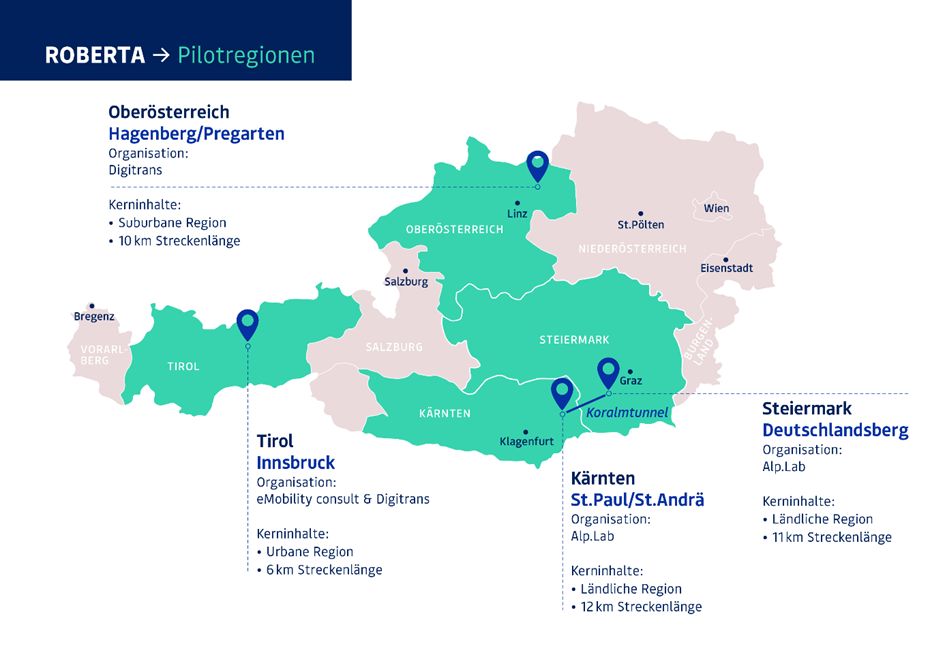
ROBERTA is supported by a broad consortium of research institutions, technology companies, energy agencies and transport operators, coordinated by the Logistikum at the University of Applied Sciences Upper Austria. From approximately 2027, highly automated Level 4 buses are expected to operate in regular scheduled services for around one year in each of four pilot regions: Upper Austria, Styria, Carinthia and Tyrol.
The project began in February 2026 and runs until 31 January 2030. During the first project year, the partners are developing the framework for real-world operation. Pilot services in the four federal states are scheduled to begin in late 2027 or early 2028.
The project has a total volume of approximately nine million euros. The FFG project ROBERTA receives around 3.5 million euros in federal funding from the Austrian Federal Ministry for Innovation, Mobility and Infrastructure. This is supplemented by approximately one million euros from the State of Upper Austria, subject to parliamentary approval, intended funding from other federal states and contributions from the project partners.
The four pilot regions:
- Upper Austria
- Hagenberg – Pregarten
- Last-mile connection from Pregarten railway station to Softwarepark Hagenberg and the University of Applied Sciences Upper Austria.
- Tyrol
- Innsbruck, Rossau commercial district
- An urban route providing better public-transport access to employment and commercial locations.
- Styria
- AREA Süd – Weststeiermark railway station area (Koralm Railway)
- Feeder buses to the Koralm Railway connecting surrounding residential and commercial areas.
- Carinthia
- AREA Süd – St Paul im Lavanttal railway station area (Koralm Railway)
- Feeder buses to the Koralm Railway strengthening regional mobility in rural areas.
Participating partners include:
Logistikum – University of Applied Sciences Upper Austria, ALP.Lab GmbH, ANDATA, Business Upper Austria, Automobil-Cluster, DigiTrans GmbH, EUSTACCHIO, Grazer Energieagentur, KEBA Group, JOANNEUM RESEARCH, Austrian Road Safety Board, SCCH Software Competence Center Hagenberg and Virtual Vehicle Research GmbH.
.jpeg)
Press coverage:
Further information and media reports on automated buses in scheduled services, the four pilot regions and the implementation of ROBERTA in Upper Austria are available from the participating institutions and transport authorities.
Upper Austrian Transport Association: ROBERTA flagship project and pilot operation
If you have legal questions concerning automated driving, connected fleets, product liability, data protection or regulation in the mobility sector, I would be pleased to support you with my specialised expertise.
Contact me regarding presentations, workshops or individual legal advice for projects in the field of automated and connected mobility.
